
At our Dry Eye Clinic, using simple diagnostic tests we evaluate your tears and offer expert advice on the most effective treatment for you.
Dry Eye Syndrome is a common condition and can be experienced by up to 30% of people at some point during their life.
It is more likely to affect people over the age of 60 and is more common in women than in men. The symptoms can be mild to severe and include itchiness or grittiness around the eyes as well as blurred vision. Though not usually serious, if left untreated, dry eye syndrome can cause vision problems and scarring of the front surface of the eye.
Dry Eye Syndrome is a condition where your eyes do not make enough tears, or your tears evaporate too quickly. It can be induced by a number of lifestyle or health issues.
Although there is no known cure, we are able to relieve your symptoms using simple solutions.
At our Dry Eye Clinic, using simple diagnostic tests we evaluate your tears and offer expert advice on the most effective treatment for you.
If you think you may have dry eyes, the following background information may be helpful.
Tears are made from a mix of water, proteins, fats, mucus and infection fighting cells.
Your tears serve several important functions:
If you have any of the following symptoms you may well be suffering from Dry Eye Syndrome:
There are several factors that can individually or collectively cause dry eyes:
Dry Eye Syndrome is diagnosed from your symptoms and an examination of your tears.
A slit-lamp is used to assess:
Different dyes or stains may be used to check for dryness in the conjunctiva and cornea.
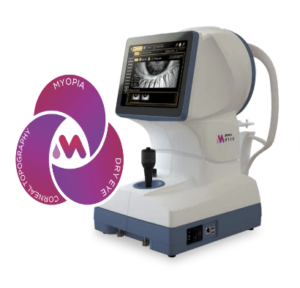
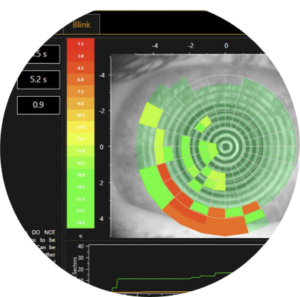
Our new MYAH instrument has a variety of dry eye assessment tools which show tear stability, areas of meibomian gland loss, thickness of the tears, how often you blink and corneal aberrations between blinks.
Most symptoms of dry eye can be alleviated using simple remedies:
Identifying the main cause of dry eye symptoms is what directs the initial treatment plan.
Following a detailed dry eye assessment we can generate an action plan which can include:
Our ocular hygienists can show you how to look after your dry eye symptoms, from showing you a safe way of putting in eye drops to the correct method of keeping the lids in good condition.
Blepharitis is a chronic, inflammatory disease of the eyelids caused by an overgrowth of normal bacteria living along the lid and the base of the eyelashes.
This overgrowth of bacteria produces a biofilm that harbours bacterial exotoxins along the lid margin. These exotoxins cause low-grade inflammation which adversely affects the tear glands, turning down tear production.
Since the eyelids are difficult to clean, the exotoxin-induced inflammation can cause significant damage to the eyelid and tear glands.
Our Blepharitis clinic offers a deep clean of the lid margin precisely and safely which will almost immediately improve your symptoms. More importantly, this can help you avoid the long-term inflammatory damage to your tear glands, preventing chronic dry eye syndrome.
Watering eyes are common and often get better on their own, but treatment may be needed if the watering affects your daily activities.
Causes of watering eyes:
Identifying the main cause of watery eye symptoms is what directs the initial treatment plan.
Following a detailed assessment we can generate an action plan which can include:
Lorem ipsum dolor sit amet, consectetur adipiscing elit


